
Breezy attended the virtual art fair that enables galleries and independent artists to show their work in custom virtual booths as well as communicate with collectors and visitors via chat rooms. This fair is designed to make online art shopping interactive, immersive and fun.
The presented artists were: Giant Swan, Ben Snell, Travis LeRoy Southworth, Jason Yung, Richard Garet, Lily & Honglei.
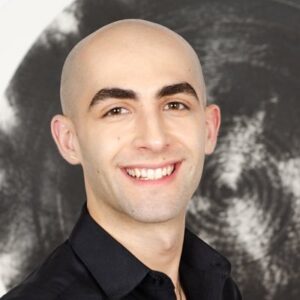
ABOUT THE ARTIST
Ben Snell is an artist who listens to the inner dialogues of machines. Using contemporary techniques and traditional motifs, he navigates the space between creation and automation, suggesting a humanist approach to technology. Exploring what it means to be born from code, he creates drawings, images and sculptures embodied with the voice and vitality of machines.
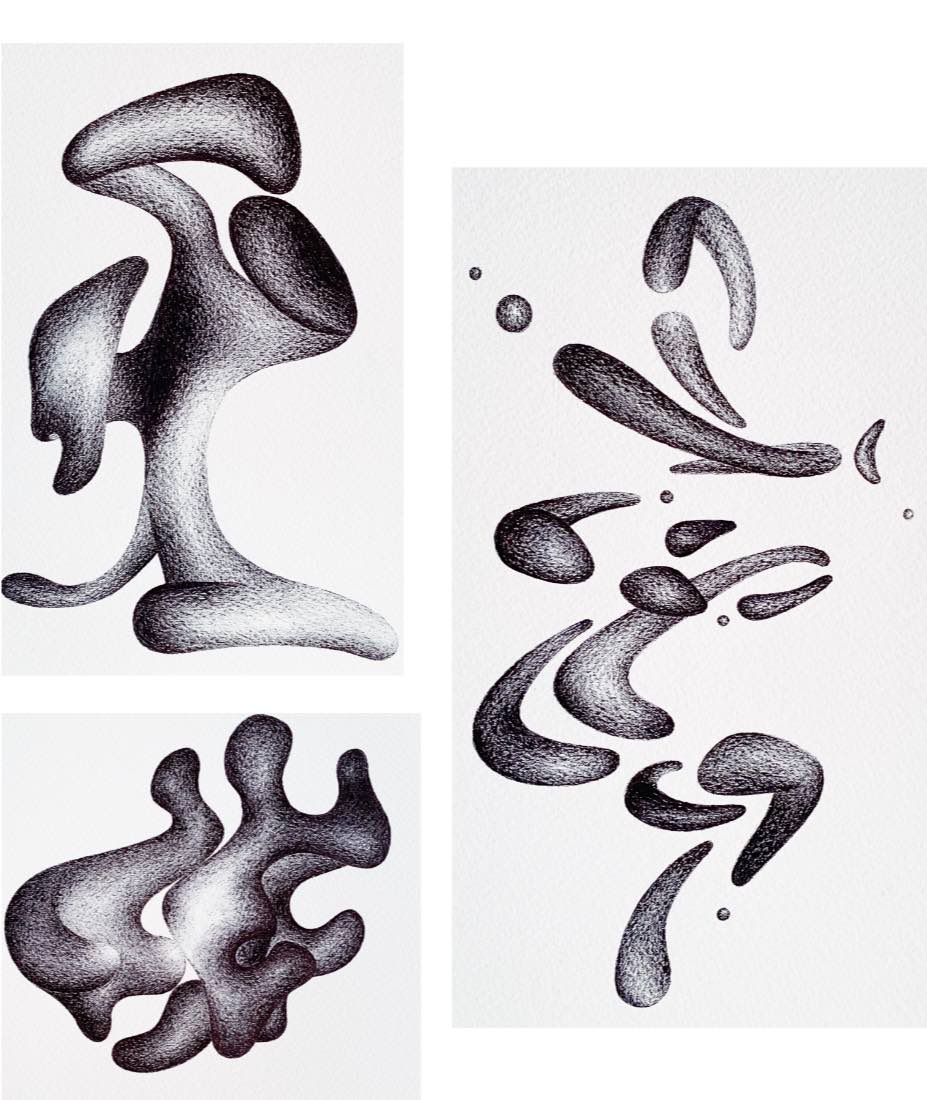
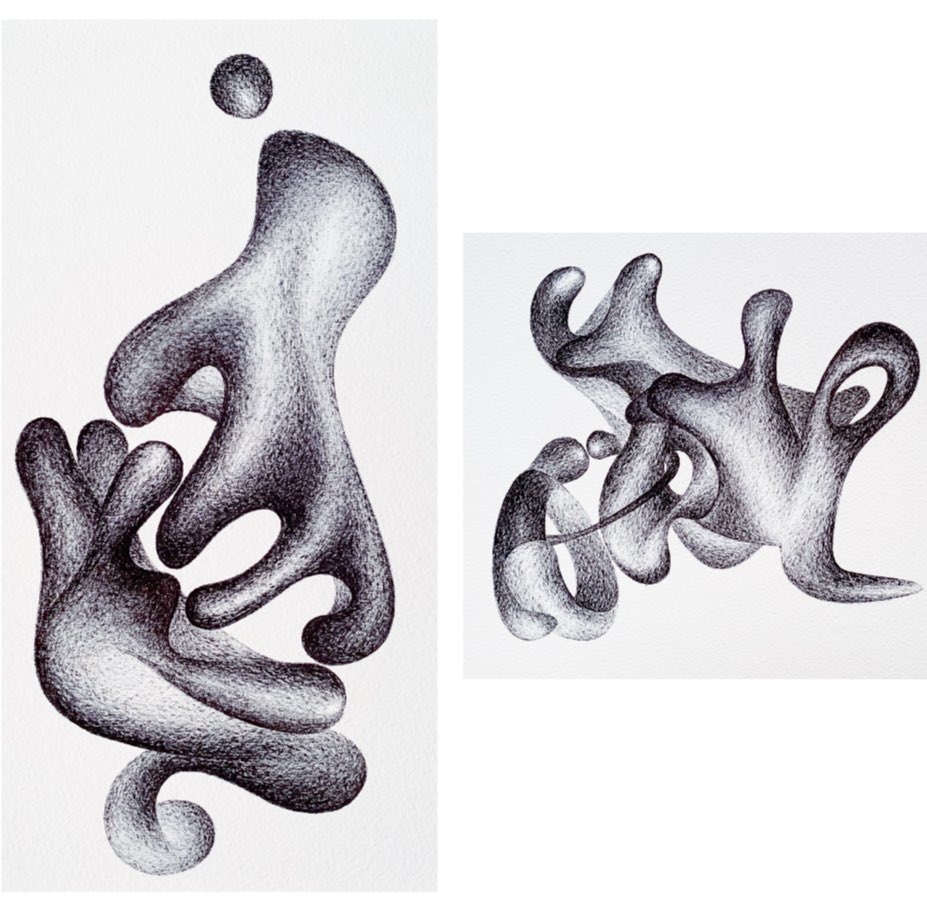
“I began doodling, for no other reason than to pass the time. For me, doodling comes from a different place than sketching.
To be clear: I began doodling forms similar to those the AI produced. The shapes could easily have been attributed to the algorithm I studied, and yet, they were somehow still my own. However, I didn’t set out with this goal; the forms just seemed to emerge on their own. They at once possessed the spirit of the algorithm and the spirit of Ben, exercised through the algorithm.
When I make these drawings, I feel overtaken. I feel a freedom and once again in the act of mark-making, I feel joy”.
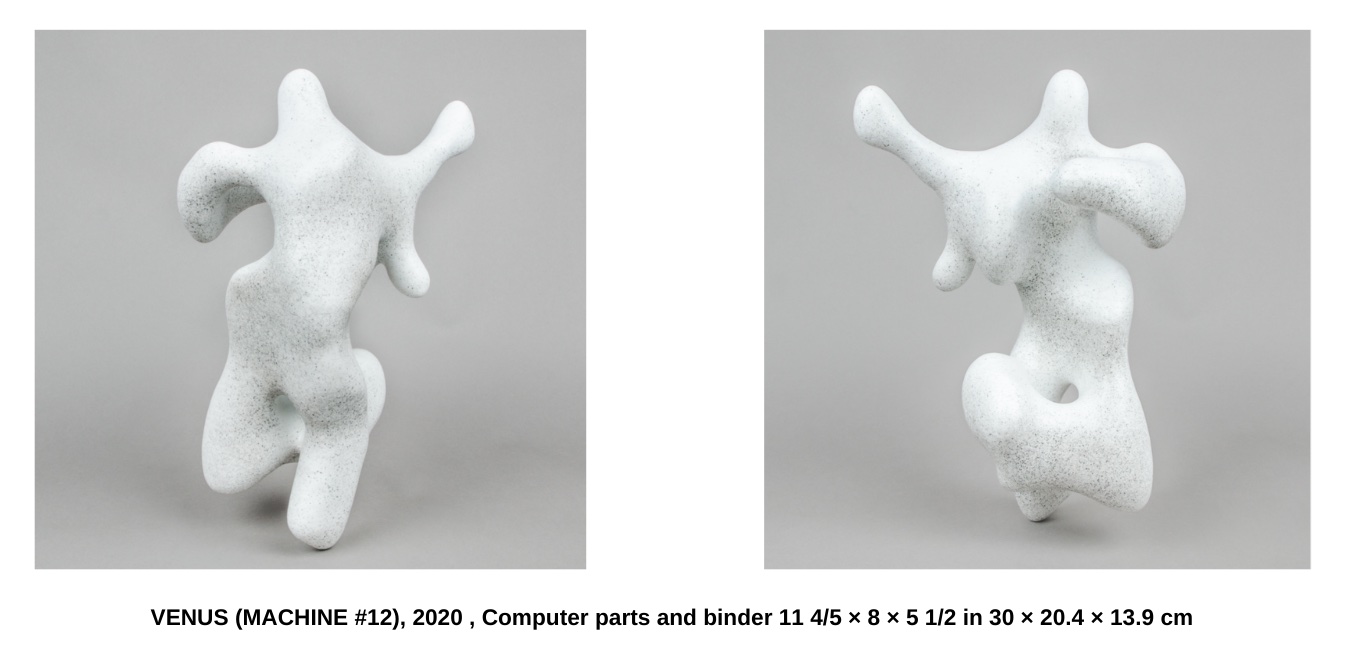
Ben Snell trains each of his computers to become a sculptor. To start, he gives his computer the canon of classical sculpture: thousands of 3D models of real sculptures held in museums across the globe.
For the computer, understanding sculpture means being able to synthesize its essence.
The computer begins by trying to recreate from memory every sculpture it sees.
When the computer becomes well enough versed in this visual language, Snell asks it to close its eyes and dream of a new form.
The sculpture has another layer of meaning imbued within its materiality. Not only made by the computer, this sculpture is also materially made from the computer that conceives it.
Snell grinds the computer to dust and utilizes it as a physical medium. Every component of the computer is pulverized iand recast into the three dimensional form it dreamt of. Thus, the computer becomes the sculpture.
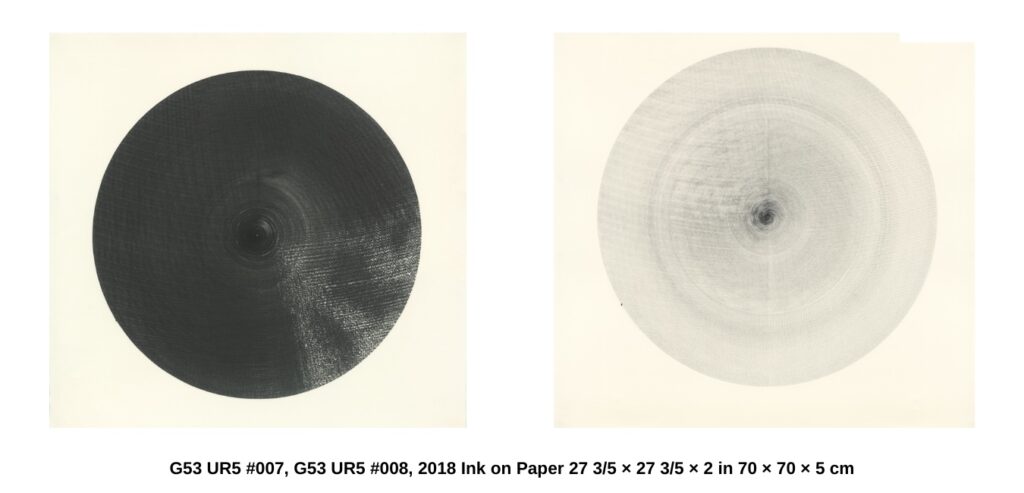
Drawing a simple spiral with a robot reveals its characteristic essence of being and moving in response to an imperfect world.
In the robot’s language, “G53” means “home.” Thus, when Snell asks it to draw a spiral, it wanders closer and closer to home, literally in the sense of approaching G53 and metaphorically in the sense of revealing its character to us.
These drawings are made with different multi-axis articulated machines, including the robotic arms UR5, UR10, and Dorna, and the DMSCNC router.
ABOUT THE ARTIST
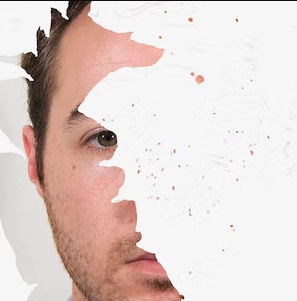
Travis LeRoy Southworth is an artist using artifacts of digital photographs to construct new portraits that aim to express the complexity of 21st-century identity, and the disconnect between the body and those around us.
An early work by Travis LeRoy Southworth that animates the erasure and ultimate explosion of his self-portrait. Over the course of the animation, his portrait dissolves and is swallowed by the white of the screen. What is left are his own imperfections. The audio is appropriated from the History Channel’s series “The Universe”. A deep voice discusses aspects of the Big Bang theory while fragments of the face generate their own cosmic shape. For the artist, the art making process is always an examination of yourself in relation to the rest of the world.
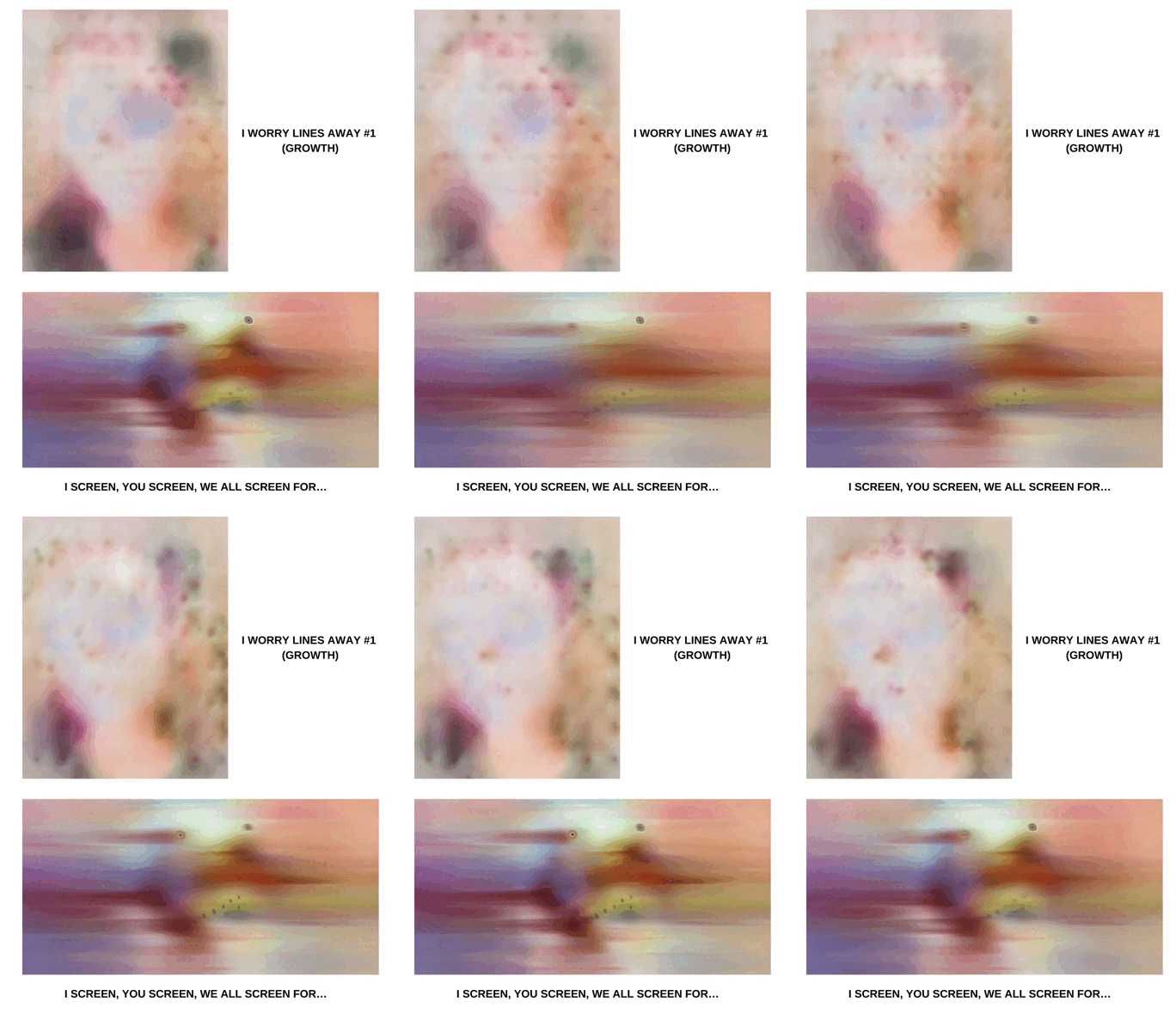
This work is part of Travis LeRoy Southworth “New beginnings, old endings, secrets secreting” where he uses the Playform GAN to explore alternative methods of art creation and digital outsourcing. He uses his past work “Color, Balance”, as a data set to train the GAN in his paintings’ style. He then feed the network specific portraits he finds online. The result of this process provides the base for new paintings he further alter in Photoshop.
ABOUT THE ARTIST
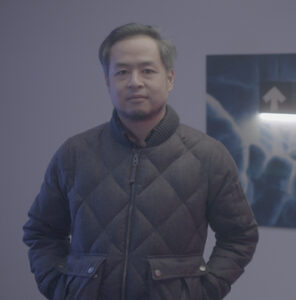
Jason Yung is a Brooklyn-based Canadian new media artist working primarily in light. Yung approaches light art from the standpoint of a painter; his work reinterprets the age-old visual logic of the painter through the 21st-century medium of LED light, and the ability to shape light through programming and actuation.
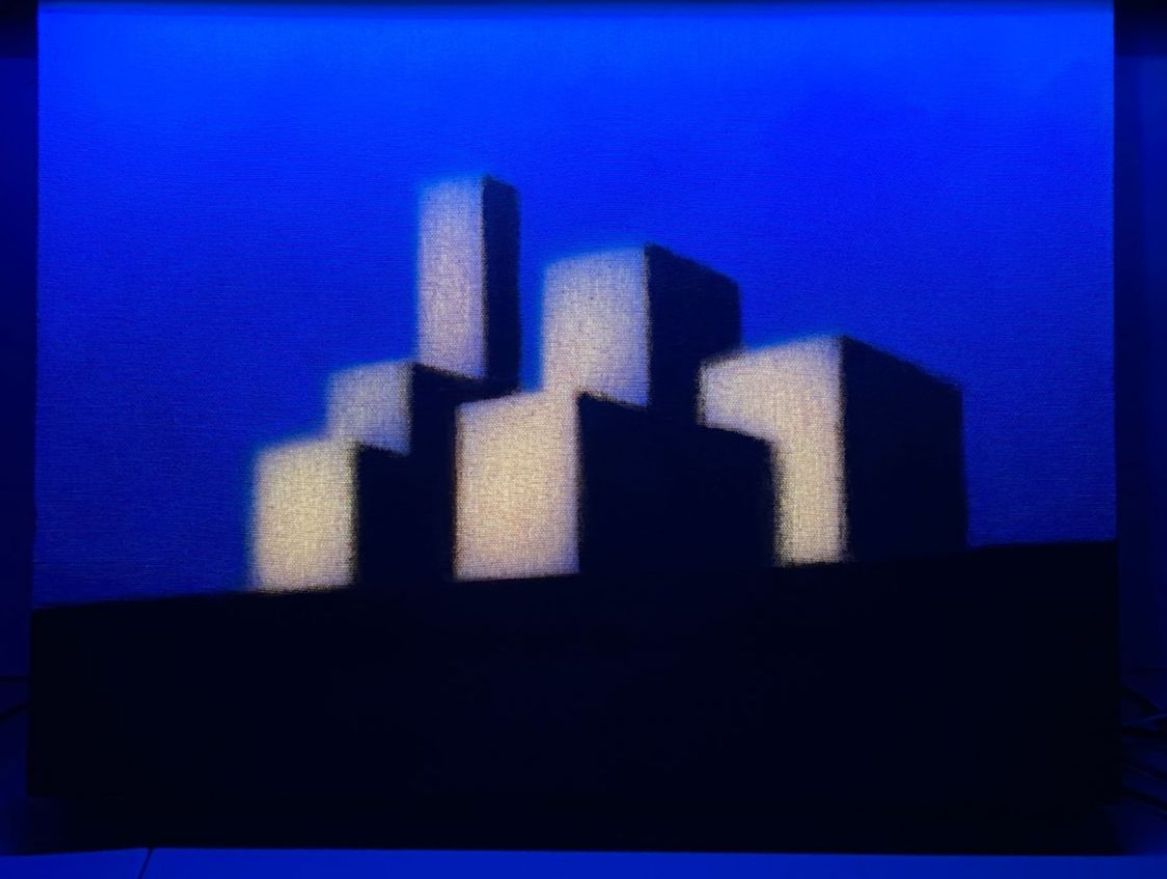
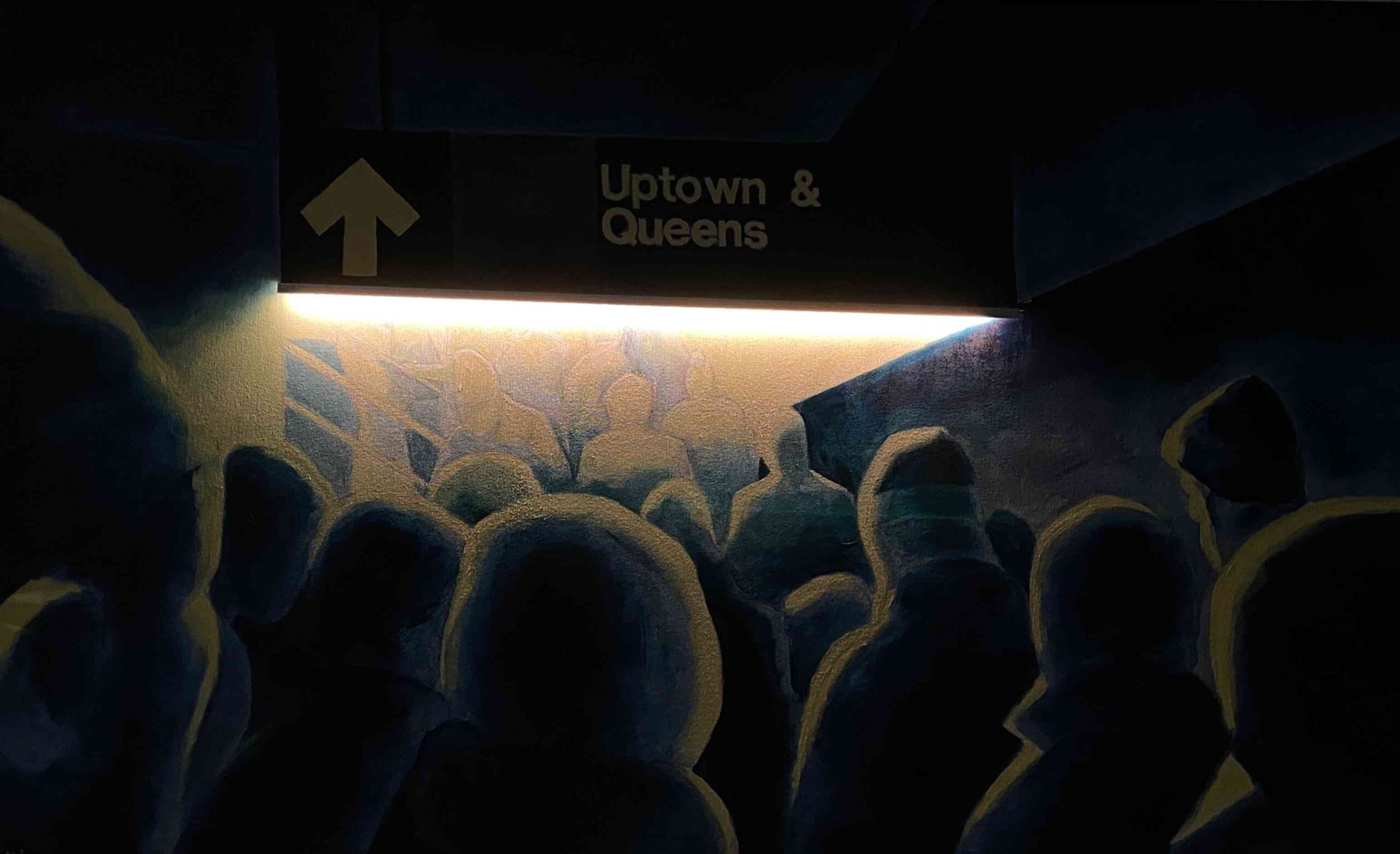
The two pieces presented, Uptown and Manhattan Dawn, represent a recent breakthrough in Jason Yung’s body of work in the integration of light and paint.In 2021, Yung brought painting and light art closer than ever before by directly integrating LED light onto painting on canvas. Prior to working with light, Yung’s main medium was acrylic on canvas, painting everyday scenes of subtle drama. His new works represent a unification of his efforts.
ABOUT THE ARTIST
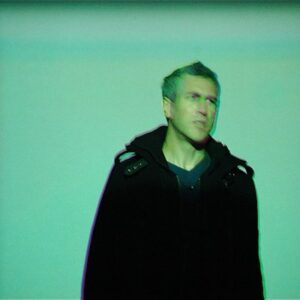
Richard Garet is exploring the extensive imprint of digitalism affecting and reshaping perception. He’s interested in the evolution and the experience of art that has melted into the digital file, transposing the medium’s own natural distinct and significant constructs while also imposing its own virtual experiential condition. This condition articulates a realm of aesthetics unequivocally glorifying the apprehension of the screen’s luminous emission, the sight through evolving technologies, and the ethereal surface of the screen ultimately dissolving all mediums.
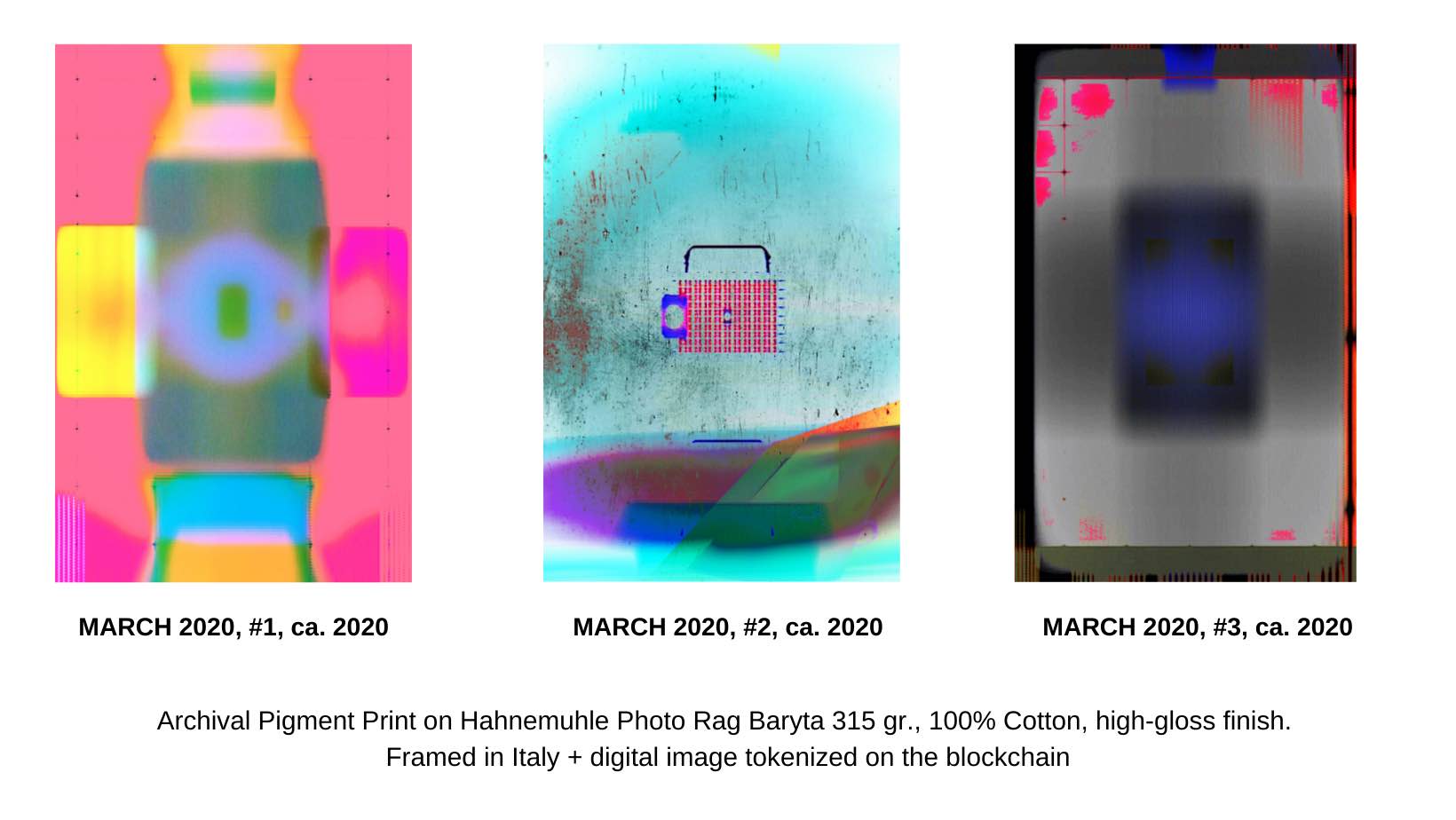
This serie is made of 8 images titled March 2020, #1 through #8 emerged from experimenting with media, material, and process. In these works Garet focuses on the properties of photography combined with discarded utilities and repurposing technological malfunction.
Richard Garet moving image works exist in an area between immateriality, object, optical phenomena, beauty, and discomfort. His process involves an extensive investigation into the nature and capabilities of sight and perception, by which we come to know the conditions of our world. Equally important is the creative exploitation of digital artifacts and glitches, which become natural elements within his creations.
ABOUT THE ARTIST
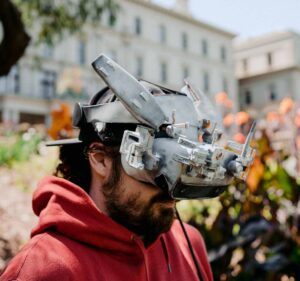
Virtual Reality artist, Sculptor, Experience and Art Director. Always working on the edge of my mediums, always pushing to elevate by creating. Recently exhibited in Melbourne, Shanghai and Miami
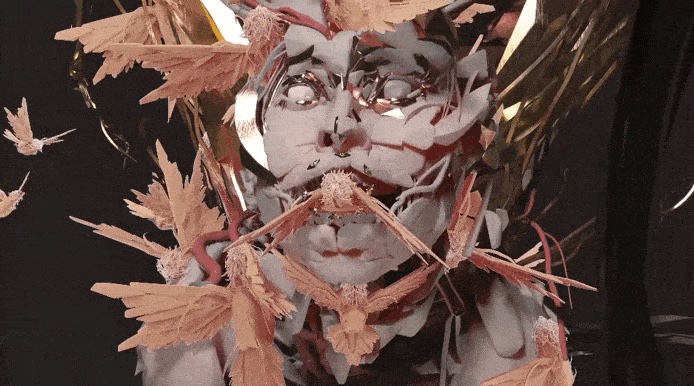
ARTIST DISCUSSION WITH GIANT SWAN & ELEONORA BRIZI
E.B.: Giant Swan, how did you get to use the VR and how did we even get to the VR tools?
G.S.: The audience’s participation has evolved in so many different ways. I think one thing that you’ll see consistently in those areas is that there are big shifts in how the tools in those mediums are used. with VR it was always a perspective delivering dream of, you know, from science fiction there was uh VR headsets in the 80s which promised visualizing digital uh data in in ways that we used to write about in books. And so it was until in early 2010 we started gaining more momentum in VR hardware which included using our motion and motion recording to a pinpoint accurate accuracy.
This is a new medium of art and especially of digital art.
E.B.: How did the role of the audience change? Is the audience necessary for the artist to exist?
G.S.: I think if we look at digital mediums as a whole and how they’ve evolved over time the audience’s input has become more and more necessary to craft a richer experience.
I mean, you put a headset on and there are no rules other than try not to fall over because the ground is still real and so the walls but everything you can see is up to the creators and the audience.
E.B.: When we enter into your VR worlds, we also enter in your personal journey, like when you make polaroids just to to fix the moment like a souvenir (as in your late art series).
What do you think about the fact that people go inside your art and could have different perspective?
G.S.: I think this is the exciting part of the VR.I try to create incredibly personal moments that are accessible to anybody they can relate to them without a lot of training, hoping that the audience is empowered to explore and and and grow their understanding of of uh the world around them maybe through art. I’m deeply motivated about bringing people in uh in more than just a experienced way where they everybody does the same thing.
I want people to feel like they’ve been in a daydream and i look to create art that gives people an opportunity to have that daydream and I think this is the best way that I could do that.
ABOUT THE ARTIST
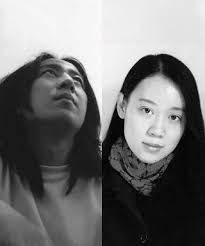
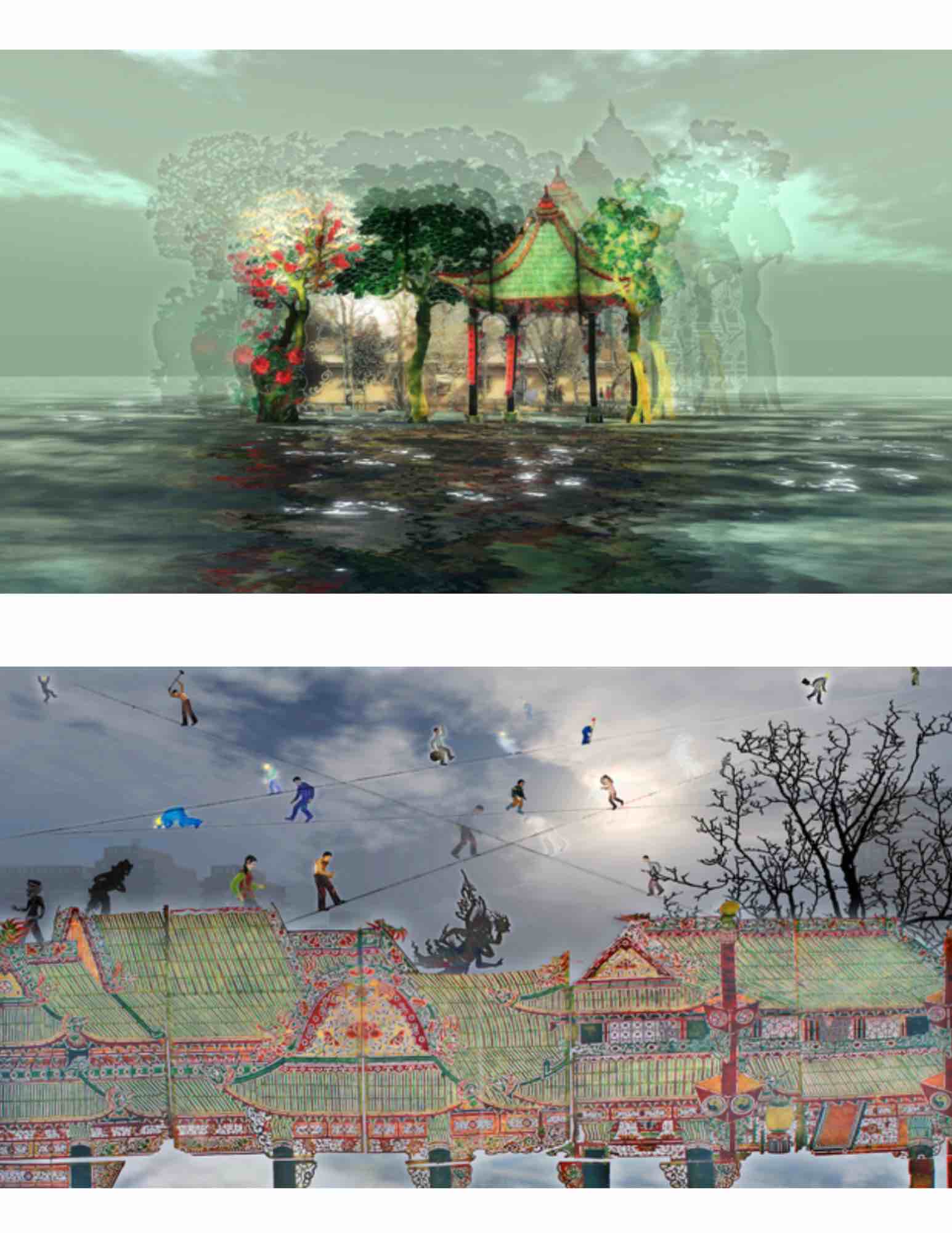
Lily & Honglei’s projects explore the new significance of art in the digital age. They examine postdigital visual culture by raising questions about apparent dichotomies such as form and narrative as well as traditional media and digital technology. These inquiries revolve around the theme of the inclusiveness of the postdigital, and consider the implications for the creative power of artists and the efficacy of artworks.
| Cookie | Duration | Description |
|---|---|---|
| cookielawinfo-checkbox-analytics | 11 months | This cookie is set by GDPR Cookie Consent plugin. The cookie is used to store the user consent for the cookies in the category "Analytics". |
| cookielawinfo-checkbox-functional | 11 months | The cookie is set by GDPR cookie consent to record the user consent for the cookies in the category "Functional". |
| cookielawinfo-checkbox-necessary | 11 months | This cookie is set by GDPR Cookie Consent plugin. The cookies is used to store the user consent for the cookies in the category "Necessary". |
| cookielawinfo-checkbox-others | 11 months | This cookie is set by GDPR Cookie Consent plugin. The cookie is used to store the user consent for the cookies in the category "Other. |
| cookielawinfo-checkbox-performance | 11 months | This cookie is set by GDPR Cookie Consent plugin. The cookie is used to store the user consent for the cookies in the category "Performance". |
| viewed_cookie_policy | 11 months | The cookie is set by the GDPR Cookie Consent plugin and is used to store whether or not user has consented to the use of cookies. It does not store any personal data. |
